
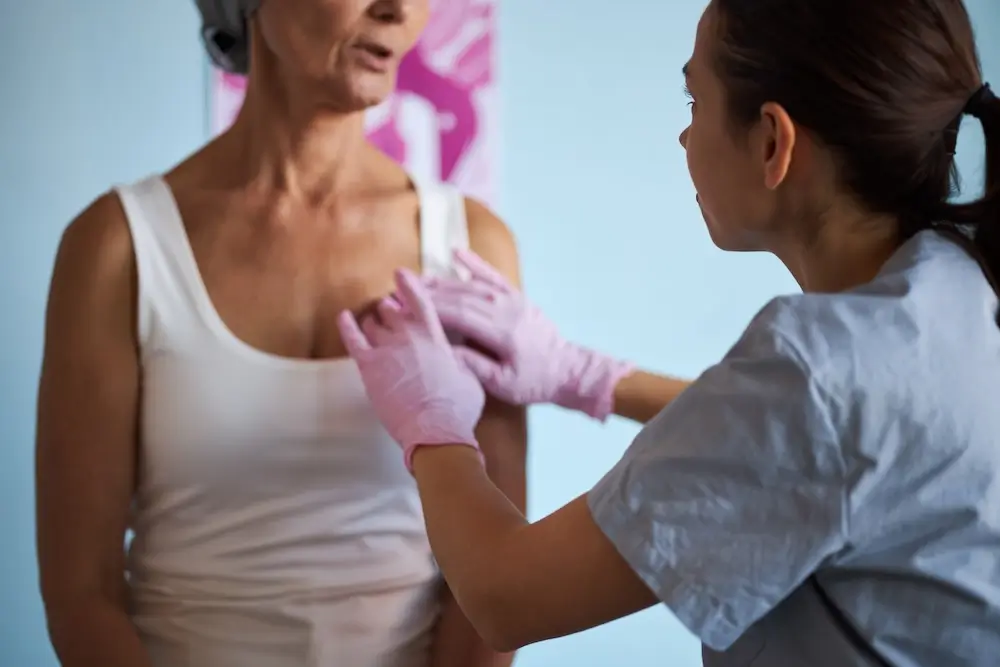
October is Breast Cancer Awareness Month. It’s a good time to build one simple habit. Getting to know your own body matters. About 1 in 8 women develop breast cancer in her lifetime, according to the National Breast Cancer Foundation. Early detection often leads to better outcomes. That starts with knowing what’s normal for you.
Self-Exams vs. Self-Awareness: What’s the Difference?
Breast self-exams and breast self-awareness are not quite the same thing. The American Cancer Society no longer recommends formal self-exams as a stand-alone screening tool. Research hasn’t shown that monthly exams alone lower breast cancer deaths.
Breast self-awareness is different. It means knowing how your breasts typically look and feel. This awareness can help you notice changes worth mentioning to your doctor. The Centers for Disease Control and Prevention recommends this kind of awareness for every woman. Mammograms remain the primary screening tool for most women, per CDC guidance. Self-checks work best as a companion habit, not a replacement.
In our practice, we often see patients who aren’t sure what counts as a normal change. That uncertainty is common. It’s also easy to address with a little guidance from your doctor.

Getting to Know What’s Normal For You
Every person’s breasts look and feel a little different. A few traits are worth paying attention to each month:
- Size and shape typically vary, and mild asymmetry is common
- Texture can feel lumpy or dense, especially before a period
- Skin usually stays smooth, without new dimpling or a rash
- Nipples typically don’t show new inversion or discharge
These traits can shift with your cycle, age, or hormone changes.
Signs to Discuss With Your Doctor
Most breast changes turn out to be benign. Still, it’s worth mentioning anything new or unusual to your doctor:
- A new lump or thickened area, in the breast or underarm
- A change in breast size, shape, or symmetry
- Skin dimpling, puckering, or a texture like an orange peel
- Nipple changes, including inversion, scaling, or unexpected discharge
- Ongoing pain in one specific spot
None of these signs point to a specific diagnosis on their own. Your doctor can help sort out what a change typically means for you.
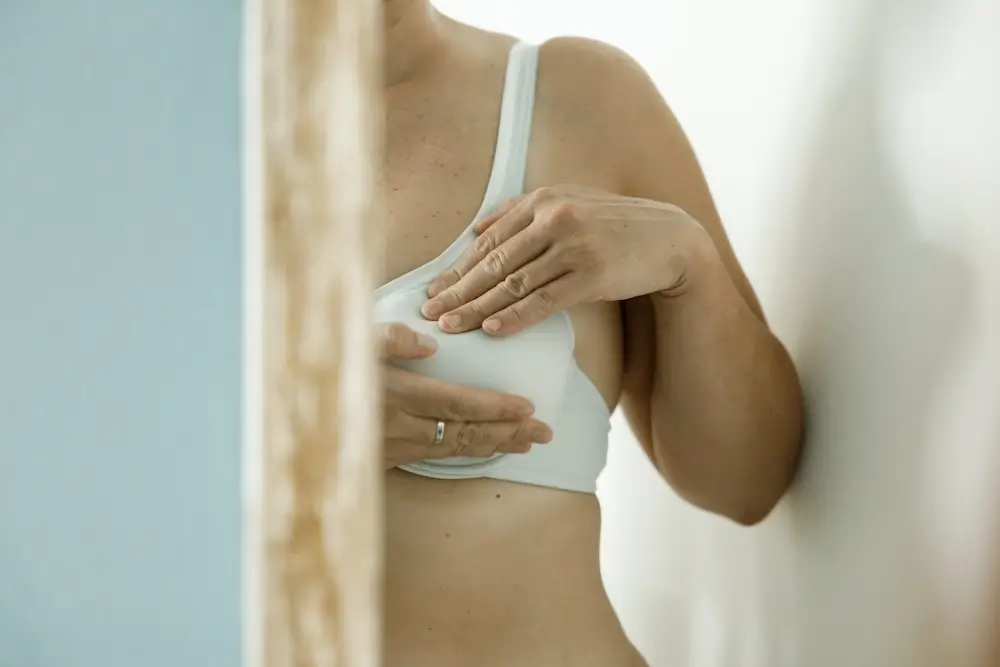
How to Do a Home Breast Check
A home check often takes just a few minutes:
- Look. Stand in front of a mirror with your arms at your sides
- Raise your arms. Check for the same changes with your arms overhead
- Feel while standing. Many people find this step easier in the shower
- Feel while lying down. Use the pads of your three middle fingers
- Check your underarms. Breast tissue often extends into this area too
Many people choose a day about a week after their period ends. Breast tissue tends to feel less tender around that time. If you don’t menstruate, pick one day each month that’s easy to remember.
Talk To Your Doctor About Breast Health
A home check is a helpful habit, not a diagnosis. If you notice a change that concerns you, don’t wait to bring it up. Our internal medicine team at Clinical Associates can examine new symptoms and coordinate next steps. We can also review your personal risk factors and mammogram schedule at your next visit.
Call Clinical Associates to schedule an appointment, or ask about breast health at your annual physical.


